Maximize Moving Efficiency with Decluttering Techniques
Introduction
Relocations have a way of exposing how much we own--and how much we don't actually need. Whether you're moving across town or across the country, the fastest way to cut costs, reduce stress, and protect your belongings is to maximize moving efficiency with decluttering techniques. By removing unnecessary volume before you pack, you reduce the number of boxes, the van size, the labour hours, and the risk of damage. In short: decluttering turns an overwhelming move into a streamlined project with measurable savings.
This comprehensive guide blends professional removals practice, behaviour science, and UK compliance insights to help you plan, sort, reduce, and pack smarter. You'll get step-by-step timelines, practical frameworks (like the 20/20 rule and the container concept), and a proven case study that shows how one family cut more than a quarter of their moving costs simply by decluttering strategically. If you're serious about efficiency and value, this is your playbook.
Table of Contents
- Why This Topic Matters
- Key Benefits
- Step-by-Step Guidance
- Expert Tips
- Common Mistakes to Avoid
- Case Study or Real-World Example
- Tools, Resources & Recommendations
- Law, Compliance or Industry Standards (UK-focused)
- Checklist
- Conclusion with CTA
- FAQ
Why This Topic Matters
Moving costs are driven primarily by volume (how much you have), distance, access/parking, and labour time. Decluttering directly reduces the first and influences the rest. Industry-standard quoting often uses cubic volume (m3) or cubic feet, van size, and man-hours as key variables. The less you move, the smaller the vehicle and crew--and the less risk, complexity, and cost.
Yet, most households underestimate their volume by 25-50%. On move day, this translates into extra trips, overtime charges, or needing an additional vehicle. A well-executed pre-move purge avoids these pitfalls. Moreover, decluttering protects your future by ensuring only valued, useful, safe belongings enter your next space. It's the single strongest strategy to maximize moving efficiency with decluttering techniques and ensure your relocation is an upgrade, not just a transfer of clutter.
Key Benefits
- Lower Removal Costs: Less volume can reduce your quote by hundreds of pounds. Dropping from a 7.5T truck to a Luton van can shave off significant costs.
- Faster Packing & Unpacking: Fewer items to wrap, box, and label means fewer hours and fewer packing materials.
- Reduced Damage Risk: Crowded vans and rushed packing cause most breakages. Fewer, well-packed boxes are safer.
- Clarity at Destination: Moving only what you need means a quicker, more intentional setup in your new home.
- Sustainability Gains: Donations, resale, and proper recycling keep items in circulation and reduce landfill.
- Better Insurance Outcomes: A tidy inventory simplifies valuation for Goods in Transit insurance and claims, if needed.
- Less Decision Fatigue: Pre-moving decisions beat rushed choices during unpacking when energy is low.
Step-by-Step Guidance
The most effective way to maximize moving efficiency with decluttering techniques is to run the process like a project. Use this timeline and frameworks to keep momentum.
12-8 Weeks Before Move: Plan and Measure
- Define your ideal volume: Estimate total cubic volume. As a rough guide, a medium moving box is ~1.5 cu ft (~0.042 m3). A typical Luton van holds ~600-700 cu ft (17-20 m3); a 7.5T truck holds ~1,200-1,300 cu ft (34-37 m3).
- Set a reduction target: Aim to cut 20-40% of non-essential volume. Most homes can shed at least 25% without reducing quality of life.
- Block time: Schedule 2-4 decluttering sessions per week. Protect these appointments like work meetings.
- Choose your frameworks: Decide which techniques you'll use (see below). Consistency beats perfection.
- Gather supplies: Colour tape or stickers for room coding, heavy-duty bin bags, donation boxes, resale boxes, a label maker or marker, and a basic inventory app or spreadsheet.
Decluttering Frameworks That Work
- The Four-Box Method: Keep, Donate/Sell, Recycle, Waste. No fifth pile. Every item moves once.
- The 20/20 Rule: If you can replace it for under ?20 in under 20 minutes, release it.
- 80/20 Pareto Principle: You use 20% of your items 80% of the time. Focus on keeping the vital few.
- Container Concept: Space is a limit. Define fixed "containers" (shelf, drawer, crate). If it doesn't fit, it doesn't stay.
- One-Touch Decision: Touch each item once and decide. Avoid "I'll revisit later."
- Category Blitzes: Tackle items by category (books, linens, toys) to avoid relocating clutter from room to room.
8-6 Weeks Before Move: High-Impact Zones
- Start where volume hides: Lofts, garages, sheds, under-bed storage, and cupboards. These areas produce the biggest cubic savings.
- Cull duplicates: Extra bedding, kitchen gadgets, tools, cables, and old tech. Keep the best, release the rest.
- Review furniture: Measure large pieces and check access at the new home (stairs, door widths, lifts). If it won't fit or suit, sell or donate now.
- Digitise paperwork: Scan documents and create a retention plan (keep originals for legal/financial records as required). Shred sensitive documents you don't need.
- Set up donation/resale channels: Charity shops, local reuse networks, Freecycle/Olio, and online marketplaces. Batch listings to save time.
6-4 Weeks Before Move: Pack While You Declutter
- Pack by room and category: As you declare an item a "keep," pack it immediately if it's non-essential. Label with room + contents + priority (e.g., "Kitchen - Pans - P2").
- Apply colour-coding: Assign a colour to each destination room. Use matching tape or stickers on boxes and at the new property. This speeds the movers and reduces questions.
- Pre-stage bulky disposals: Book council bulky waste collections, WEEE recycling for electronics, or a licensed waste carrier (check credentials).
- Confirm storage strategy: If using storage, pack long-term items together, inventory them, and mark "STORAGE" clearly.
4-2 Weeks Before Move: Final Reduce and Ready
- Second-pass review: Revisit keeps. Often, 10-15% more can go once you see packed volume.
- Open-first kits: Prepare one box per person with 72 hours of essentials: meds, toiletries, chargers, bedding, basic kitchen gear.
- Hazardous items plan: Segregate paint, chemicals, gas canisters, and batteries. Many movers cannot carry them; arrange safe disposal or self-transport according to local rules.
- Fragiles and valuables: Wrap carefully, double-box when needed, and consider carrying jewellery/critical documents yourself.
Move Week: Execute with Confidence
- Label doors at destination: Place colour/room labels on each door. Movers can self-route boxes efficiently.
- Floor plan and zones: Print a simple plan. Mark zones for assembly, boxes, and heavy items.
- Keep pathways clear: Safety first. Clear access saves time and prevents damage.
- Quality control: Check off inventory as items are loaded/unloaded. Photograph furniture condition if needed.
Expert Tips
- Quantify to motivate: Track "cubic metres saved." Every 0.5 m3 is roughly 12 medium boxes you won't pay to move.
- Time-box decisions: Use a timer. 25-minute sprints with 5-minute breaks beat marathon sessions.
- Decision scripts: Ask: Do I use it? Love it? Will it fit? Will it earn its place? If not, let it go.
- Photograph sentimental items: Keep the memory without keeping everything. Curate a small "memory box."
- Upgrade instead of duplicate: Sell two mediocre items to fund one better replacement at destination.
- Pad wisely: Towels and linens can cushion fragile items, reducing bubble wrap needs.
- Weigh the cost of moving vs replacing: If moving costs ?2-?4 per box across distance (labour/materials aside), low-value, heavy items may be better to donate and replace later.
- Stage a household "swap shop": Family members claim items you planned to discard. Anything unclaimed by a set time goes to donation or sale.
- Inventory high-value items: Record make/model/serial numbers and photos for insurance.
- Communicate with movers: Share volume reductions as you progress. Updated estimates can lower your final bill and help with van allocation.
Common Mistakes to Avoid
- Starting too late: Decluttering the week before move day leads to panic, poor decisions, and higher costs.
- Relying on "maybe" piles: No indecision piles. Decide once; handle once.
- Ignoring large furniture: Big pieces drive van size. Decide early on sofas, wardrobes, and bookcases.
- Under-labelling: Vague labels ("misc") cost time. Include room, category, and priority.
- Unlicensed waste disposal: Hiring cheap, unlicensed carriers can lead to fly-tipping--and you can be fined.
- Over-packing boxes: Keep boxes under ~20 kg. Too heavy means slower moves and higher breakage risk.
- Skipping hazardous items plan: Many movers won't carry paint, solvents, or gas canisters. Arrange proper disposal in advance.
- Not measuring access at destination: Stairs, lifts, and hall turns matter. Measure before committing to keep oversized items.
Case Study or Real-World Example
Profile: A family of four moving from a 3-bedroom semi in Manchester to a 4th-floor flat in Leeds (lift available). Initial survey estimated 32 m3 (approx. 1,130 cu ft) requiring a 7.5T vehicle with two movers.
Decluttering Plan: 6-week schedule, target reduction 25-30%. High-impact areas: garage, loft, kids' toys, duplicate kitchenware. Furniture audit (two wardrobes, old sofa).
Actions:
- Sold large wardrobe (+?120), donated sofa (no fire label; arranged council collection), recycled two broken bookshelves.
- Digitised 3 boxes of paperwork; shredded non-essential sensitive documents.
- Culled 60 books, 4 boxes of toys, and 3 boxes of kitchen duplicates.
- Disposed of paint cans via local Household Waste Recycling Centre (HWRC) and returned a propane cylinder to supplier.
Outcome: Final volume 23 m3 (~812 cu ft), a 28% reduction. The move shifted to a Luton van with an extra shuttle trip instead of a 7.5T truck, cutting the quote by ?640. Packing time reduced by ~8 hours, and the family arrived with a lean, organised setup. The children's rooms were fully unpacked on day one because the essentials were clearly marked and non-essential items never made the trip.
ROI: Time invested in decluttering (~20 hours) yielded total benefits valued at ~?750-?900 (reduced removal costs + resale proceeds + fewer packing materials). That's ?37-?45 per hour of effort, plus less stress.
Tools, Resources & Recommendations
- Inventory & Labelling: Sortly, Google Sheets, or Notion for room lists; a label maker or bold permanent markers; coloured tape or stickers.
- Measuring & Planning: Tape measure, phone scanner apps for floor plans, and painter's tape to mark furniture footprints at the new home.
- Protective Materials: Double-walled boxes, archival boxes for documents, wardrobe boxes, furniture blankets, and reusable crates where possible.
- Resale & Reuse: Local charity shops, community swap groups, Freecycle, Gumtree, Facebook Marketplace, and specialist platforms for fashion or tech.
- Waste & Recycling: Council bulky waste collections, Household Waste Recycling Centres (HWRCs), and licensed waste carriers (ask for their waste carrier registration number).
- Shredding: Cross-cut home shredder or certified shredding services for sensitive documents.
- Project Management: Calendar blocks, reminders, and a visible hall "decision station" with your four boxes and a timer.
Law, Compliance or Industry Standards (UK-focused if applicable)
Decluttering isn't just about efficiency--it's also about doing the right thing. In the UK, several regulations and industry standards shape how you discard, donate, and move items safely.
- Waste (Household Waste) Duty of Care: You must take reasonable steps to ensure waste is handled properly. If using a third party, check they are a licensed waste carrier and keep records (e.g., a waste transfer note). Fly-tipping by a rogue carrier can still lead to penalties for the householder.
- WEEE Regulations (2013): Electrical and electronic equipment should be recycled via appropriate schemes. Many retailers offer take-back; councils provide WEEE facilities at HWRCs.
- Furniture Fire Safety Labels: Charity shops typically require upholstered items to have intact Furniture and Furnishings (Fire) (Safety) Regulations labels. Without the label, arrange council collection or appropriate disposal.
- Data Protection & Confidentiality: For personal documents, follow best practice: securely shred items that contain personal data you do not need to keep. Businesses moving premises must comply with the Data Protection Act 2018/GDPR.
- Hazardous Waste: Paint, solvents, gas cylinders, and some batteries/chemicals require special handling. Check your local council's guidance and never place them in general waste.
- Charity Donations & Gift Aid: When donating to UK charities, you can often add Gift Aid to increase value if you're a UK taxpayer; charities will explain eligibility and process.
- Removals Industry Standards: Seek movers who follow recognised codes of practice (e.g., British Association of Removers). Expect clear terms, insurance details (Goods in Transit), and complaints/ADR procedures.
- Parking and Access Compliance: Arrange parking suspensions or permits where needed to avoid fines and delays on move day.
Checklist
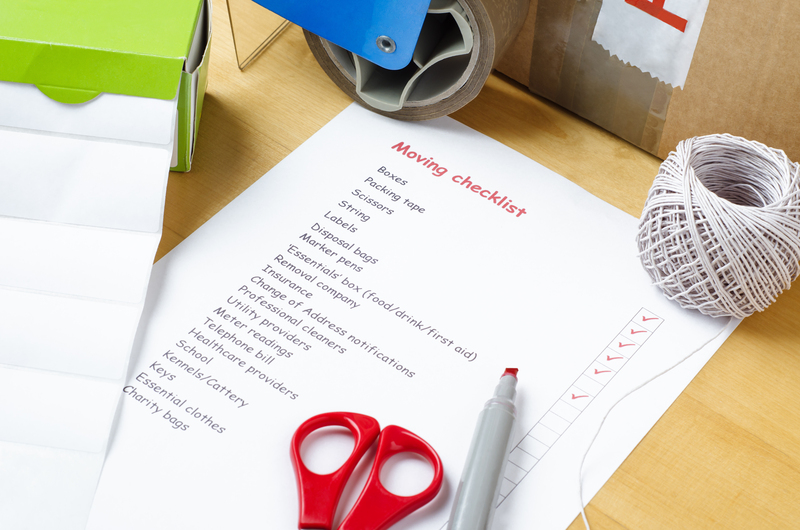
Use this pre-move checklist to maximize moving efficiency with decluttering techniques and stay in control.
- Planning
- Estimate total volume (m3) and set a reduction target (20-40%).
- Book calendar slots for decluttering sessions and blocker tasks.
- Choose your frameworks (Four-Box, 20/20, Container Concept).
- Assemble supplies: boxes, markers, coloured tape, bin bags, shredder.
- High-Impact Decluttering
- Loft, garage, shed cleared and categorised.
- Furniture audit complete; measurements taken for destination access.
- Duplicates culled in kitchen, linens, tools, and gadgets.
- Old tech and cables sorted; WEEE disposal planned.
- Compliance & Disposal
- Licensed waste carrier verified (keep license number/receipt).
- Charity donation criteria checked (fire labels on upholstery).
- Hazardous items segregated; council/HWRC plan in place.
- Personal data sorted and shredded as appropriate.
- Packing & Labelling
- Room-coded labels and clear contents descriptions.
- Priority tags (P1 essentials, P2 soon, P3 later).
- Open-first kits prepared for each household member.
- Inventory for high-value items with photos and serial numbers.
- Move Day Readiness
- Parking permits/suspensions confirmed.
- Destination floor plan printed and room doors labelled.
- Pathways cleared; protective floor coverings ready if needed.
- Refreshments, tools (Allen keys, screwdriver), and tape to hand.
Conclusion with CTA
Decluttering isn't just a tidy-up--it's a strategic lever that lowers costs, streamlines logistics, and makes your new home easier to set up. When you maximize moving efficiency with decluttering techniques, you convert overwhelm into a plan, boxes into a curated collection, and moving day into a precise operation. Start early, be decisive, follow the frameworks, and respect compliance--your future self will thank you.
Get a free quote today and see how much you can save.
FAQ
When should I start decluttering before a move?
Begin 8-12 weeks before move day. Early action lets you sell items at better prices, schedule council collections, and avoid last-minute panic.
What is the fastest way to reduce moving volume?
Target high-volume zones first (loft, garage, cupboards). Apply the Four-Box Method and remove duplicates. A focused weekend can cut 20-30% quickly.
How do I decide what to keep?
Use a decision script: Do I use it? Do I love it? Does it fit the new space and lifestyle? If not, donate, sell, or recycle. The 20/20 rule helps break attachment to low-cost, replaceable items.
Is it worth selling items or should I donate?
Sell when value is meaningful and time allows (e.g., furniture, quality tech). Donate when resale would delay progress or bring little cash. Time is money during a move.
How do I handle documents and personal data?
Digitise where appropriate and keep essential originals. Shred any document with personal information you do not need. Businesses must comply with the Data Protection Act 2018/GDPR.
What items will movers typically refuse?
Hazardous materials (paint, solvents, gas cylinders), perishable food, and sometimes plants or open liquids. Ask your mover for a prohibited items list in advance.
How do I measure if my furniture will fit in the new property?
Measure item dimensions and key access points: door widths, stair turns, ceiling heights, lift size, and hallway lengths. Create a simple floor plan to test placements.
What if I'm moving last-minute?
Use a triage approach: focus on bulky items, duplicates, and anything broken or expired. Book a licensed waste carrier or council pick-up, and donate what you can locally.
How can I keep costs down on packing materials?
Use double-walled boxes for structure, but supplement padding with towels and linens. Reuse sturdy boxes from local shops and neighbours; avoid weak, single-use cartons.
Should I hire a professional decluttering service?
If time is scarce or decisions feel overwhelming, a pro can deliver fast results. Ensure they're insured, ask for a written scope, and clarify how they handle donations and waste legally.
How do I prevent clutter from following me to the new home?
Set "container limits" for categories (bookshelves for books, specific toy bins). Maintain one-in, one-out rules and schedule a 30-day post-move review to recheck what you actually use.
What's the link between decluttering and insurance?
A clear inventory simplifies valuation for Goods in Transit cover and speeds any claim. Decluttering reduces the number of items at risk and the chance of packing damage.
Can decluttering really change my van size or crew?
Yes. Reducing volume can move you from a 7.5T to a Luton van or reduce the number of movers needed. This can save hundreds of pounds and shorten loading times.
Any tips for decluttering with children?
Give kids a "keep" container and involve them in choosing favourites. Photograph sentimental items and set a limit for toys moving forward. Celebrate donations to teach generosity.
What about eco-friendly disposal?
Use local reuse networks, donate textiles and furniture (with fire labels), and take electronics to WEEE facilities. Ask carriers for their waste carrier license--avoid fly-tippers.
How do I manage sentimental items without guilt?
Create a curated memory box, digitise photos, and keep a few meaningful pieces. Remind yourself: your memories live in you, not in every object.
Is there a formula to estimate how many boxes I'll need?
As a rough guide, 1-1.5 boxes per m2 of living space works for many homes, adjusted for lifestyle (collectors need more). Decluttering first reduces this significantly.
What's the single most important rule?
Decide once, handle once. Every item gets a final decision the moment you touch it--keep and pack, donate/sell, recycle, or dispose.